
The Seven Churches: A Call to Faithfulness
Scripture Covered: Revelation 2–3
Key Verse: Revelation 2:10 (CSB) — “Don’t be afraid of what you are about to suffer. Look, the devil is about to throw some of you into prison to test you, and you will experience affliction for ten days. Be faithful to the point of death, and I will give you the crown of life.”
Over the last two weeks, we've seen Jesus revealed as the sacrificial and victorious Lamb of God, the sovereignty of God over all creation, and the fullness of the Holy Spirit. Now, in Revelation 2–3, we hear what this victorious Jesus has to say to his church.
Jesus addresses seven real churches in Asia Minor with encouragement, correction, warning, and promise. Although each church faced its own challenges, every letter calls all the churches to listen. Their struggles reflect the challenges Christians have faced throughout history: persecution, spiritual compromise, the temptation of wealth and comfort, and the danger of losing our love for Jesus.
And that raises an important question: If Jesus wrote a letter to Quaboag Church, what would he say?
Jesus Sees What's Really Going On
Revelation reveals reality from God's perspective, and that includes the spiritual condition of his church. Jesus sees beyond our reputation, activities, and outward appearances. He knows who we really are.
The church in Sardis had a reputation for being alive, but Jesus said it was spiritually dead. He called them to wake up, strengthen what remained, and repent (Revelation 3:1–4). Laodicea faced a similar problem. They considered themselves wealthy and self-sufficient, but Jesus saw their spiritual poverty.
A church can look successful on the outside while being spiritually unhealthy. Another church may appear small or unimpressive while faithfully making disciples and reaching its community for Christ. What matters most isn't how others perceive us, but what Jesus sees when he looks at us.
The same is true for Quaboag. Jesus knows our hearts, our priorities, and our faithfulness. We are ultimately accountable to him.
Jesus Demands Faithfulness (He's not asking)
Five of the seven churches receive serious correction, while Smyrna and Philadelphia receive none. Their letters remind us that remaining faithful to Jesus isn't always easy.
The Christians in Smyrna faced poverty, slander, and persecution. Jesus didn't promise to remove them from their suffering. Instead, he called them to remain faithful, even to the point of death, and promised them the crown of life (Revelation 2:9–10).
Pergamum faced a different challenge. Christians there were living in a major center of Roman political power and pagan worship, where pressure to compromise their allegiance to Jesus was significant. Jesus commended them for holding on to his name, even after Antipas had been killed for his faith. Yet he also rebuked them for tolerating teachings that encouraged idolatry and sexual immorality (Revelation 2:13–16).
They were resisting persecution from the outside while tolerating compromise on the inside.
That's a warning for us. Christians can loudly proclaim their allegiance to Jesus while living lives that increasingly resemble the culture around them. We can be quick to criticize the sin we see in the world while overlooking the compromise in our own hearts.
"The greatest threat to our faithfulness may not be opposition from the world, but becoming increasingly like it."
Jesus confronts sin in his church because he loves his people. As he tells Laodicea, “As many as I love, I rebuke and discipline. So be zealous and repent” (Revelation 3:19).
Jesus Promises Victory to Those Who Remain Faithful
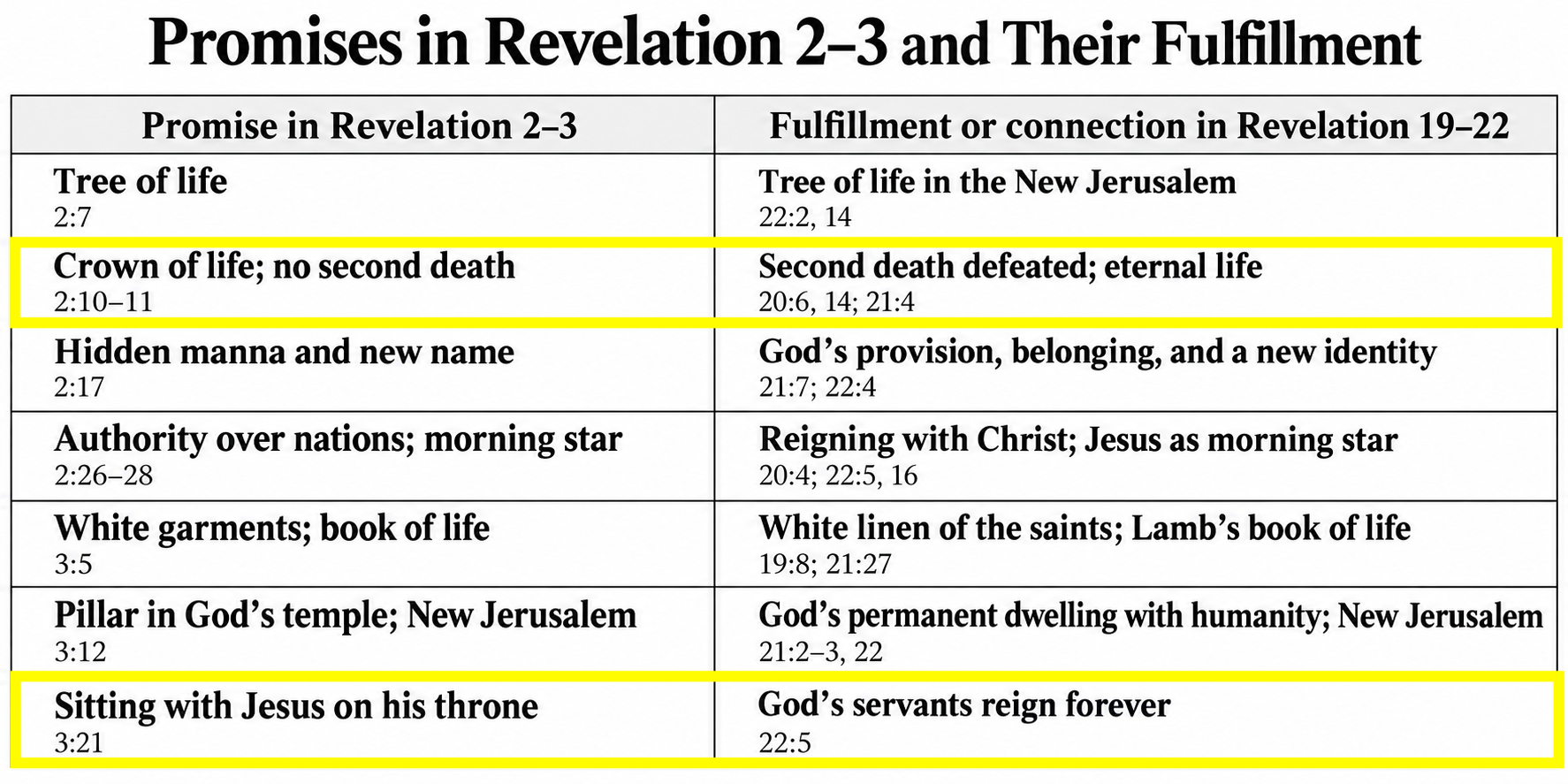
Each of the seven letters includes a promise to those who conquer. These promises remind believers that suffering, persecution, and temptation do not have the final word.
The rest of Revelation will pull back the curtain even further. The beast reveals the danger of giving our allegiance to worldly power. Babylon reveals the seductive influence of wealth and comfort. The dragon reveals the spiritual enemy behind the conflict. But the Lamb reveals who ultimately wins.
These visions aren't disconnected from the experiences of the seven churches. They reveal the larger spiritual war behind the pressures those Christians were already facing.
And Jesus offers hope. Though his people may experience suffering in this life, they can remain faithful in anticipation of the future he has promised. As Romans 8:18 reminds us, our present sufferings cannot compare with the glory to come.
This victory isn't something we earn through perfect behavior. It is possible because of the sacrificial and victorious Lamb revealed in Revelation 5. Jesus conquered through sacrifice, and we share in his victory through faithfulness to him.
That's the hope Revelation was written to inspire. Don't give up. Remaining faithful to Jesus is worth it.
This Week's Challenge
Take time this week to examine your own faithfulness to Jesus. Are there areas where comfort, wealth, cultural pressure, or sin have begun to compete with your allegiance to him? Are you as willing to confront compromise in your own life as you are to recognize it in the world around you?
As Quaboag continues to grow, raise up leaders and disciple-makers, and prepare for a new building, remember that our identity is not found in a political party, denomination, leader, worship style, or even our growth. Our identity is tied to Jesus as our Savior and King.
The most important thing about us will always be our faithfulness to him.
Closing Reflective Question
If Jesus wrote a letter specifically to Quaboag Church (and one specifically to you), what would he commend, what would he confront, and where would he call you to greater faithfulness?